
Table of Contents
Nobody plans for the moment the haldi actually hits.
The laugh that comes out of nowhere. The aunt who ends up with more turmeric on her face than the bride. The photograph nobody posed for that becomes the one everyone wants printed and framed.
But the setting around that moment is absolutely worth planning.
We are Destination Weddings India. Our team has spent ten years planning haldi ceremonies across this country. On beaches, in palace courtyards, inside jungle resorts, on mountain lawns, on houseboats. We have seen what works and what does not. We have watched decorators build flower walls at five in the morning and photographers go completely quiet because the light and the setting did something nobody expected.
This guide has everything we know about haldi decoration in one place. Whether the ceremony is happening in a Delhi living room or on a Goa beach, there is something here that applies directly to your situation.
Destination Haldi Decoration – India’s Most Stunning Locations
Most couples spend weeks on their reception décor and about two days thinking about the haldi setup. Which is a strange priority, because in most wedding albums the haldi photographs are the ones people keep coming back to. No heavy lehenga, no stiff poses. Just turmeric, laughter, and whatever the light happened to be doing that morning.
Here is what ten years of planning destination haldis has taught us: the location does more decorative work than any florist can. Pick the right place and you genuinely need very little else. The setting carries the ceremony.
Here is our honest ground-level guide to India’s best haldi destinations, what each one actually feels like, what decoration works there, and why some of them will make your jaw drop before the turmeric even comes out.
Goa Haldi Decoration
There is something specific that happens when you mix a traditional Indian haldi with a Goa beach at nine in the morning. The light is still soft. The tide is coming in or going out. Someone is already barefoot. And the marigolds, bright orange against all that blue water, look almost unreal.
Goa haldi setups work best when the decoration stays simple and lets the location do the heavy lifting. A low bamboo arch draped with tropical florals like birds of paradise, hibiscus, and palm fronds is genuinely all you need as a backdrop. No heavy fabricated structures. No foam boards. The sea handles the visual weight that those things would normally carry.
Jute matting on the sand for seating. Coconut shell diyas. A few marigold strings. A well-styled haldi thali. That is a complete Goa beach haldi setup and it photographs beautifully every single time.
For couples who prefer poolside over beach, most Goa resort properties have pool decks that are equally photogenic. Floating marigold arrangements in the pool, a simple fabric canopy overhead, water on three sides. It photographs like a magazine editorial with almost no effort.
One honest note from our team: book your beach haldi for morning. Goa afternoons are hot, the light goes flat, and the beach fills up with tourists. Nine to eleven in the morning is the window where everything, the light, the temperature, the crowd, works in your favour.
Plan Your Goa Destination Wedding →
Udaipur Haldi Decoration
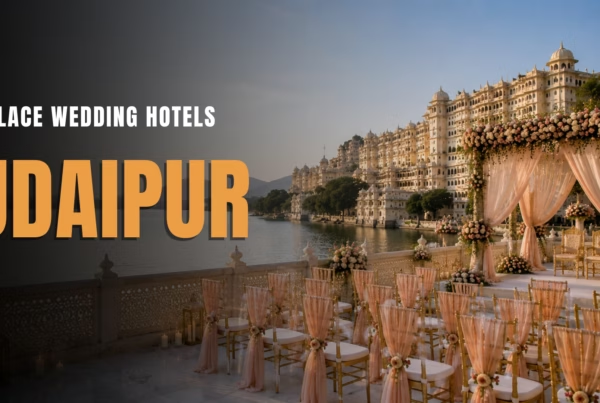
Udaipur does something unfair to every other destination on this list. It sets a bar that is almost unreasonable. Lake Pichola in the background. Palace architecture on every side. The kind of golden light that costs nothing but photographs like it cost everything.
Our advice for Udaipur haldi setups is always the same. Do not try to compete with the architecture because you will not win. Work with it instead. Drape marigold garlands over existing stone carvings. Line heritage steps with brass diyas. Set up a jhoola in the courtyard decorated with mogra and yellow roses and let the haveli walls behind it do the rest.
Lake-view terrace haldis in Udaipur deserve a special mention. We have a few properties in our network where the haldi setup sits on a terrace with an unobstructed view of the lake and the City Palace. The decoration for those setups is almost beside the point. Guests are not looking at the flower wall. They are looking at the water.
Heritage hotel haldis in Udaipur offer something genuinely rare. A ceremony that feels old, rooted, and authentically Indian. Not a themed reproduction of tradition. The real thing, in a real place, with centuries of history in the walls around you.
Get Free Udaipur Wedding Quote →
Jaipur Haldi Decoration
Jaipur haldi ceremonies have a visual quality that is specific to this city and impossible to replicate anywhere else. The pink sandstone. The carved jharokha windows. The haveli courtyards that seem designed precisely for ceremonies like this one. There is a warmth to the light here, something to do with the sandstone reflecting it differently, that makes photographs look like they were shot on film.
Jhoola setups are particularly popular for Jaipur haldis. A decorated swing hung in a haveli courtyard, bride seated and surrounded by family, marigold garlands looped through existing stone arches. It is one of the most iconic images in Indian wedding photography and the setting earns most of that credit.
Our team always recommends coordinating Jaipur haldi decoration with the existing architectural colors rather than against them. The warm pink and terracotta of the city’s buildings are a natural companion to saffron, orange, and gold. Bring in too much white or pastel and it fights the surroundings. Stay in the warm palette and everything comes together beautifully.
Block-printed fabrics, Rajasthani pottery as props, mirror-work hangings. Local craft elements work naturally here and cost far less than fabricated décor shipped in from elsewhere.
Plan Your Jaipur Destination Wedding →
Jodhpur Haldi Decoration
Jodhpur is not subtle. The blue-painted houses cascading toward Mehrangarh Fort. The scale of the fort against the sky. The contrast between ancient stone and vivid color. Everything about this city is built for maximum visual impact and haldi ceremonies here match that energy completely.
Rooftop and fort terrace setups in Jodhpur create a backdrop unlike anything else in India. From certain vantage points you can see the entire blue city spread below while the ceremony happens above it. Deep saffron fabrics, large marigold installations, brass lanterns in rows. The decoration needs to be bold enough to hold its own against that scale and it usually succeeds.
One small detail worth knowing: desert marigolds, the local Rajasthan variety, are smaller, more intense in color, and strongly fragrant. They photograph differently from standard marigolds used in most city setups. Ask your Jodhpur decorator to source locally. The difference genuinely shows in photographs.
Get Free Jodhpur Wedding Consultation →
Jaisalmer Haldi Decoration
Of everything on this list, Jaisalmer is the most specific kind of experience. It is not for everyone. If you want a lush floral-heavy setup, this is not your place. But if you want something genuinely cinematic, something that looks like nothing else you have ever seen at an Indian wedding, this is it.
Dune haldis in Jaisalmer happen in the late afternoon when the sand turns gold and the shadows go long. A fabric tent in saffron and royal blue. Low Rajasthani seating directly on the sand. Brass lanterns placed at intervals, already lit as the sun starts dropping. Camel motif props. Marigold garlands looped between tent poles. The fort visible on the horizon if you position the setup correctly.
Evening desert haldis take this further. Fire torches in the sand. A sky full of stars with almost zero light pollution. The silence of the desert broken only by whatever music the family has arranged. We have watched guests at Jaisalmer evening haldis go completely quiet, not because the ceremony demanded it, but because the setting did. That is the highest compliment a venue can receive.
Jim Corbett Haldi Decoration
Jim Corbett haldi setups are earthy, intimate, and genuinely different from every palace or beach setup on this list. The jungle does not offer dramatic architecture or sweeping water views. What it offers instead is texture. The sound of the forest, filtered green light, the smell of earth and leaves, the feeling of being somewhere completely removed from ordinary life.
Bamboo and cane structures work naturally here. Terracotta pots filled with wildflowers. Marigolds alongside local blooms you will not find at a city florist. A simple canopy in a forest clearing with the trees as the real backdrop.
Our partner property Byaah by Paatlidun in Jim Corbett was built specifically for intimate destination wedding experiences in nature and their haldi setups reflect that philosophy completely. Rustic, real, zero pretension. If that is what you are after, Jim Corbett delivers it better than anywhere else.
Get Free Jim Corbett Wedding Quote →
Kashmir Haldi Decoration
Kashmir haldi ceremonies are rare. Not many couples make it here because logistics, seasonality, and planning complexity keep numbers low. Which means couples who do make it here have something genuinely unusual. A haldi experience that almost nobody else they know has had.
Chinar tree gardens in autumn are the obvious setting. Leaves turning fire orange and gold, mountains behind, the clarity of air at altitude. A simple setup against that backdrop, marigold decoration, a styled thali, good lighting, becomes extraordinary purely by location.
Dal Lake floating haldi setups are the most dramatic option. A decorated shikara on the lake, houseboats and mountains reflected in the water, family gathered on the ghaat. These require specific planning and our team handles full coordination for Kashmir setups including logistics, vendor relationships, and on-ground support.
Plan Your Kashmir Destination Wedding →
Mussoorie and Shimla Haldi Decoration
Hill station haldis have a quality that flat-land couples do not anticipate until they are actually in it. The cool air changes everything. Guests are more present. Nobody is wilting in heat. The light at altitude has a crispness that photographs beautifully.
Misty morning haldis in Mussoorie, where the clouds are literally level with the ceremony space, are something we recommend to every couple considering a hill station wedding. Pine trees, valley views, colonial-era stone architecture. The decoration can be minimal because the setting provides everything the eye needs.
Get Free Hill Station Wedding Quote →
Rishikesh Haldi Decoration
Rishikesh works on a completely different emotional register from the rest of this list. The Ganga ghaat backdrop. The sound of flowing water. The mountains above. There is a spiritual weight to this place that adds something to the ceremony that purely aesthetic settings simply do not have.
Riverside haldi setups in Rishikesh stay natural by both necessity and choice. Simple decoration, local flowers, diyas on the water. The ceremony carries the moment, not the décor. Couples who choose Rishikesh for their haldi often say afterwards it felt more meaningful than they expected. That is a specific kind of outcome that cannot be manufactured by any decorator, no matter how good they are.
Alibaug Haldi Decoration
Alibaug is two hours from Mumbai and approximately a world away from wedding planning stress. Villa lawns, coastal light, the kind of intimate setting that works perfectly for a smaller haldi with close family.
The setups here tend to be relaxed and personal. No grand architecture competing for attention. No famous backdrop to position against. Just a beautiful property, good food, family, and a haldi that feels like it belongs to the people in it rather than the venue around them.
For Mumbai-based couples who want a destination feel without a flight, Alibaug is consistently our first recommendation.
Get Free Alibaug Wedding Consultation →
Every destination on this list offers something completely different. The haldi you have in Jaisalmer will feel nothing like the one you would have had in Jim Corbett. The memories you make in Kashmir will be unlike anything Udaipur would have given you. Choosing where to go is choosing what kind of story to tell.
If you are not sure which destination fits your wedding vision, our team has planned haldi ceremonies across all of these locations and can help you figure out exactly where yours belongs.
Not Sure Which Destination? Fill Our Free Wedding Planning Form →
Types of Haldi Decoration by Wedding Style
Here is something our team tells couples in almost every first consultation. The haldi decoration that works beautifully at a Rajasthan palace will look completely out of place on a Goa beach. And the setup that feels perfect in a Kerala backwater will seem strange in a Delhi farmhouse.
Decoration does not exist separately from the wedding style. It lives inside a setting, a mood, a specific kind of celebration. Get the match right and everything clicks. Get it wrong and even expensive decoration feels off.
This is how we think about it when we start planning a couple’s haldi setup. Matching decoration to wedding type first, everything else second.
Beach Wedding Haldi Decoration
Beach haldis have one rule above everything else: do not fight the location.
The sea is already doing more visual work than any decorator could. Light bouncing off water, sand underfoot, waves in the background underneath the family’s laughter. None of that needs competition. It needs company.
Driftwood props scattered around the setup. Coconut shell diyas instead of brass ones because they sit better on sand and photograph warmer. Tropical florals through a low bamboo arch: hibiscus, birds of paradise, plumeria, palm fronds. Jute matting on the sand for seating. And bare feet, always. Nobody should be wearing shoes at a beach haldi.
The haldi thali at a beach wedding looks best with tropical flowers mixed in alongside traditional marigolds. A small hibiscus bloom next to the kumkum katori changes the whole feel of the close-up photograph.
Our team flags this for every beach haldi: morning setups only. By eleven the light hardens and the beach fills up. The nine to ten-thirty window is where beach haldi photographs earn their reputation.
Plan Your Beach Destination Wedding →
Palace and Palatial Wedding Haldi Decoration
Palace haldis are the ones where guests walk in, stop walking, and visibly recalibrate their expectations for the rest of the wedding.
The architecture at heritage properties, carved sandstone arches, hand-painted ceilings, centuries-old courtyards, does something no fabricated structure can do. It provides weight. History. A sense that this place has seen celebrations before and considers yours worthy of the space.
Our approach to palace haldi decoration is always subtractive rather than additive. We work with what the property already has rather than bringing in elaborate structures to compete with it. Marigold garlands looped through existing stone carvings. Brass diyas lined along heritage steps. A jhoola hung in the courtyard from a beam that has been holding weight for two hundred years.
The jhoola in a palace courtyard is worth calling out specifically. It is one of the most photographed haldi setups in Indian wedding photography for a very good reason. Bride on a flower-covered swing. Haveli walls behind. Family gathered around. It is an image that carries the full emotional weight of what a haldi ceremony actually is.
Get Free Palace Wedding Consultation →
Desert Wedding Haldi Decoration
Desert haldi decoration is about creating a human-scale ceremony inside a landscape that is vast, ancient, and completely indifferent to what you are doing in it.
A fabric tent canopy in saffron, gold, and royal blue gives the setup an anchor. Low seating on Rajasthani dhurries directly on the sand with no raised platforms and nothing that creates distance between the ceremony and the ground. Brass lanterns placed at intervals, lit from late afternoon. Embroidered Rajasthani fabrics. Camel motif props that feel native to the setting.
Evening desert haldis are a different category altogether. Once the sun goes below the dunes and the lanterns take over as the primary light source, something shifts in the atmosphere. We have watched guests at Jaisalmer evening haldis go completely still. Just watching, not photographing. That is the highest compliment a setting can receive.
Plan Your Desert Destination Wedding →
Forest and Jungle Wedding Haldi Decoration
Forest haldis are genuinely underrated.
While couples chase palace views and beach backdrops, the jungle quietly offers something those places cannot: complete sensory immersion. The smell of earth and leaves. Filtered green light through the canopy. Bird sounds. The feeling of being removed from everything ordinary.
Decoration in forest settings works best when it borrows from the environment. Bamboo structures instead of metal frames. Terracotta pots with wildflowers. Local blooms alongside earthy marigolds. A natural clearing as the ceremony space rather than a constructed stage.
Our honest advice for Jim Corbett or any forest venue: resist the urge to over-decorate. The jungle has already set the scene. Your job is to sit beautifully inside it, not redesign it.
Get Free Forest Wedding Quote →
Hillside Wedding Haldi Decoration
Something happens to people at altitude. They slow down. They look around more. The air is different. The light is different. The whole ceremony feels less rushed than it would at sea level.
Hill station haldi setups benefit enormously from the natural backdrop. Valley views, pine trees, colonial stone architecture, the possibility of mist rolling in and making everything look cinematic without any effort from the decoration team.
Wildflower arrangements suit hill station haldis far better than standard marigold-heavy setups. Local flowers that actually grow at that altitude integrate naturally into the setting. Soft white and cream fabric draping rather than sharp yellows. Simple wooden props. The valley view behind the couple doing the work a fabricated backdrop would normally do.
Misty morning haldis in Mussoorie or Shimla are specifically worth planning for. When the clouds come down to eye level and the ceremony happens inside them, the photographs look like nothing else.
Plan Your Hill Station Wedding →
Backwater Wedding Haldi Decoration
Kerala backwater haldis operate on a completely different rhythm from everything else on this list. Slower. More deliberate. The water is still. The air is thick with humidity and the smell of coconut and earth. The ceremony feels ancient in a way that is specific to this part of India.
Banana leaf setups are the foundation here. Large leaves as surfaces, as backdrop elements, as natural trays for ceremony items. Floating florals on the water. Marigold petals on the surface. Brass oil lamps in rows. The water reflection behind the couple doubling every decoration element without any additional cost.
Our team always recommends late afternoon for backwater haldis. The light goes golden on the water and the Kerala landscape takes on a quality no photography filter can recreate.
Get Free Backwater Wedding Consultation →
Cruise Wedding Haldi Decoration
A haldi on a cruise deck is compact by necessity and extraordinary by circumstance.
The ocean is the backdrop. Nothing a decorator can bring on board will match what is already outside the railing. The job here is to create a defined, intimate ceremony space within an open deck environment.
Compact floral installations that will not be affected by sea wind. Low seating close to the deck surface. Marigold strings on the railings. A well-styled thali. The horizon doing everything a flower wall would normally do.
Cruise haldis are genuinely rare in India. Couples who have them tend to say afterwards that the experience felt completely their own. Nobody else they know has a story quite like it.
City Wedding Haldi Decoration
City haldis get underestimated constantly. The assumption is that without a dramatic natural backdrop the decoration has to carry everything, which makes it expensive and stressful. Our team disagrees with that assumption.
A hotel rooftop in Mumbai at the right time of day has its own drama. The city skyline behind the couple, the urban scale of it, the contrast between that backdrop and a deeply traditional ceremony happening in front of it. A farmhouse on the outskirts of Delhi with a simple marigold setup on a green lawn is quietly beautiful in its own way.
City haldis work best when the decoration is clean, intentional, and does not try to simulate a setting it is not. One strong backdrop. Thoughtful seating. Proper lighting. The ceremony does the rest.
The mistake most couples make is copying a setup they saw on Instagram without checking whether the setting, the light, and the context that made it work match their own situation.
Our job is to make sure the decoration matches the wedding, not just in style but in feeling. If you know your wedding type but are not sure which setup suits it best, that conversation is exactly what the free consultation is for.
Tell Us Your Wedding Type – Get Free Venue Recommendation →
Haldi Decoration Themes
Honestly, most couples do not know what haldi theme they want until they see the one they do not want.
They come to us with saved Instagram reels, Pinterest boards, and screenshots from cousins’ weddings. Somewhere in that pile is usually one image they keep returning to. That image is almost always the answer.
But for couples who want to think it through before diving into mood boards, here is a straightforward breakdown. Nine themes, honestly described. No overselling.
Classic Marigold and Mogra
This is what most Indian families have been doing for generations and there is a very good reason it has not gone anywhere. Marigold strings, mogra garlands, a brass thali, a well-decorated chowki. The whole thing smells incredible and photographs warmly without trying. If your family is the kind where the aunties take over the decoration and somehow make it look better than anything a professional would have done, this is your theme.
Works best at home setups, haveli courtyards, any venue with warm tones in the walls.
Pastel Garden
For couples who look at traditional orange-heavy haldi setups and feel nothing. This theme swaps marigold dominance for blush roses, white tuberose, and sage green foliage. The palette is quieter. The photographs are softer. It suits people who want their haldi to feel a little different from every other haldi they have attended.
Works best at resort lawns, hill station properties, and boutique farmhouses.
Royal Rajasthani
Loud, layered, and unapologetically maximalist. Mirror work hangings, embroidered fabrics, marigold curtains, brass everywhere. This theme was essentially invented for palace and haveli venues in Udaipur, Jaipur, and Jodhpur. Outside of those settings it can feel like a costume. Inside them it feels completely natural.
Rustic and Earthy
No foam boards. No plastic props. No anything that looks like it was ordered from an event supply company three days before the wedding. Terracotta, bamboo, jute, dried florals, wildflowers from wherever the venue is located. We point couples toward this theme when they are doing a forest resort or jungle property, Jim Corbett especially. The setting and the decoration speak the same language.
Tropical and Beachy
Palm fronds, hibiscus, birds of paradise, coconut shell diyas, bare feet on sand or grass. This theme works because it stops pretending it is not on a beach. Most of the decoration is already there: the ocean, the light, the air. The florals just complete the sentence. Built for Goa, Alibaug, Diu, and any coastal property.
Minimalist Modern
One strong floral variety. One color. One backdrop that is actually good rather than three backdrops that are fine. This theme is for couples who find most Indian wedding decoration visually exhausting and want the ceremony itself to be what guests remember, not the quantity of marigolds in the room. Harder to execute than it looks because minimalism requires more decision-making, not less.
Works best at contemporary hotels and properties with strong architectural character.
Fusion Indian-Western
Brass diyas on linen-draped tables. Marigolds next to pampas grass. Traditional chowki seating surrounded by garden chairs. This is not for everyone, but for the couples it suits, usually NRI families or intercultural weddings, it feels genuinely personal rather than borrowed from someone else’s celebration.
Boho and Maximalist
Different from Royal Rajasthani in one important way. This theme is about texture and layering rather than cultural richness. Macramé, dried florals, mismatched textiles, hanging installations at different heights. When it works it looks intentionally abundant. When it does not it looks like nobody made any decisions. The execution matters more here than in any other theme on this list.
Needs space. Works best at large farmhouses and outdoor resort lawns.
Sunflower Theme
The quiet breakout trend of 2026. Couples who want warm yellow tones without the predictability of a standard marigold setup are landing here. Sunflowers are bigger, bolder, and more graphic. They also perform extremely well in reels and short-form video, which is now a genuine consideration in decoration decisions whether we like it or not.
Needs outdoor space and daylight to read correctly. Garden properties and resort lawns only.
Found the one that sounds like you? The next question is which destination and venue fits that theme best. That is a five-minute conversation with our team that most couples say should have happened much earlier in their planning.
Found Your Theme? Get Free Destination Match →
Haldi Decoration at Home – Complete Practical Guide
Not every haldi needs a palace or a beach. Some of the best ones happen in a small Delhi terrace with forty people crammed in, marigolds bought from the corner market that morning, and someone’s nani running the whole operation from a plastic chair.
Home haldis have something destination setups sometimes lack. They feel lived in. The walls know the family. The space has history. And when the decoration is done right, even a modest home setup can produce photographs that genuinely move people.
Our team gets asked about home haldi decoration constantly, by families who are doing the haldi locally before a destination wedding and by couples whose entire wedding is a home affair. This is everything we tell them.
The 5-Element Formula for Simple Haldi Decoration at Home
Every good home haldi decoration comes down to five things. Not fifty. Five. Get these right and the rest takes care of itself.
One: The Backdrop
This is the most important element and the one that earns the most in photographs. Everything else can be simple if the backdrop is strong. A marigold flower wall, fabric draping across a plain wall, a bamboo frame threaded with fresh flowers. Pick one and commit to it. Do not split your efforts across three mediocre backdrops. One excellent backdrop beats three average ones every single time.
Two: The Seating
Where the bride or groom sits during the ceremony. A low wooden chowki decorated with marigold garlands and a flower cushion. A jhoola if there is a beam or strong hook available. Bright floor cushions on a patterned dhurrie for the surrounding family. The seating area should feel like the ceremony has a home, a specific place where it lives.
Three: The Entry
The doorway or entrance to the ceremony space. Marigold torans, mango leaf hangings, a simple arch if the space allows. Guests walking through a decorated entry arrive at the ceremony differently than guests who just walk into a room. It takes fifteen minutes and costs almost nothing.
Four: The Haldi Thali
Style it properly. A brass thali, fresh flowers arranged around the haldi paste bowl, two or three lit diyas, mogra scattered across the surface. The thali is photographed in close-up more than almost anything else at the ceremony. It deserves five minutes of actual attention.
Five: One Surprise Element
Something unexpected that makes the setup feel personal rather than templated. A neon sign with the couple’s names. A swing hung from an unlikely beam. A trail of marigold petals leading from the gate to the ceremony space. Earthen pots painted in the wedding colors. One thing that is specific to this family, this couple, this home.
Easy Haldi Decoration at Home – Step by Step
People overcomplicate this. Here is how our team would actually set up a simple haldi decoration at home the morning of the ceremony.
The night before: Sort flowers immediately after buying. Marigold strings go in water, loose flowers in buckets. Set up the backdrop frame or hanging structure so the actual flower work goes quickly in the morning. Move furniture and clear the space completely so you are not making decoration decisions around a sofa.
Three hours before: Hang the backdrop first. This takes the longest and sets the visual tone for everything else. Once it is up, every other decision becomes easier because you are decorating around something rather than into nothing.
Two hours before: Set up seating. Lay dhurries and cushions. Decorate the chowki or jhoola. Hang entry decoration, torans on doorways, marigold strings along railings, petals on the entry path.
One hour before: Style the haldi thali. Set up props. Check lighting. If the ceremony is indoors or in low light, place diyas and fairy lights now so they are already lit and settled when guests arrive. Do a quick walk-through and remove anything that looks cluttered.
Where to buy: Flowers from the local phool mandi, always. Not a florist shop. The mandi price for marigold strings is a fraction of retail and the flowers are fresher. Buy the morning of the event, not the day before. Diyas, matkas, and brass items from any local market. Fabric draping from whatever the family already has. Dupattas and sarees draped well look better than cheap event fabric bought specifically for the occasion.
Want a Destination Haldi Instead? Fill Free Planning Form →
Indoor Haldi Decoration – Small Space Solutions
The hardest haldi to decorate is the one happening in an apartment living room with eleven feet of usable wall space and forty-five people on the guest list.
Our honest advice for indoor haldi decoration in small spaces: go vertical, not wide.
A tall narrow backdrop uses less floor space than a wide horizontal one and reads just as well in photographs. Hang decoration from the ceiling where possible because overhead installations make a small space feel designed rather than cramped. Clear the room more aggressively than feels necessary. Every extra piece of furniture left in the space competes with the decoration. Remove it.
Apartment terrace setups: Terraces are often better than they look on first assessment. String lights along the perimeter, marigold torans along railings, a backdrop against one wall, floor seating with cushions. Terraces have natural airflow and outdoor light that indoor rooms do not have. Even a small terrace can handle a haldi for twenty to thirty people comfortably if the furniture is right.
Living room setups: Push all furniture to one wall or remove it entirely. Use one wall as the backdrop wall. Keep the floor seating low and spread wide so the room reads as a ceremony space rather than a room with decoration in it. Control the lighting. Close curtains on windows that are creating awkward shadows and use warm artificial light to fill the space evenly.
Small garden or courtyard: Even a ten-by-ten foot garden patch can hold a beautiful haldi setup. The outdoor setting does most of the work: natural light, the green of plants, the smell of earth. Add a simple backdrop at one end, a decorated chowki, marigold strings along whatever boundary wall exists, and the space is complete.
DIY vs. Hiring a Decorator – The Honest Comparison
This is the question every family argues about and our team has a straightforward position on it.
Do it yourself if: The ceremony is small. The setup is genuinely simple with one backdrop, basic seating, and no structural installation. The family has people willing to start the night before and work through the morning without it becoming a source of stress. And critically, if the DIY process itself is part of how your family celebrates. Aunties making flower walls together the night before a haldi is its own kind of memory.
Hire a decorator if: The guest list is above fifty. Any element requires structural installation like a jhoola, an arch, or an overhead installation. The family is already stretched thin with other wedding coordination. Or if the photographs matter enough that you do not want to risk a setup that looks improvised.
The honest comparison: a basic professional haldi decoration setup for a home ceremony covers backdrop, seating, entry, and thali styling. DIY for the same setup using mandi flowers and rented or owned props can bring costs down significantly. The real difference is time and energy, which during a wedding week is not always available.
Skip the Stress – Plan Destination Haldi Free →
Shopping List – What to Buy, Rent, or Make
Buy: Marigold strings and loose flowers from the mandi, morning of the event. Mogra garlands from the mandi, same day. Diyas from the local market, can buy well in advance. Kumkum, haldi, and ceremony items from a grocery or puja shop. Small fresh flowers for thali styling from the mandi.
Rent: Brass thali and katoris from local event rental vendors. Fabric backdrop stands and frames from event rental. Floor cushions and bolster pillows in large quantities from event rental. Cane chairs if needed from event rental.
Make: Marigold toran for the doorway by stringing marigold heads onto jute twine the night before. Twenty minutes and costs almost nothing. Flower wall panel using a wire mesh frame with marigold heads wired in rows. Three to four hours with help. Decorated matkas using plain terracotta pots wrapped in fabric strips and marigold garlands. Petal rangoli at the entry using loose petals arranged on the floor. No skill required and takes about thirty minutes.
The gap between a home haldi that looks thoughtfully done and one that looks hurried is smaller than most people think. It is mostly about editing. Removing what does not belong and committing fully to what does.
For families who want the haldi at home but the reception, mehendi, or full wedding at a destination, that combination is something our team plans regularly and is worth a conversation.
Let Experts Handle Everything – Get Free Quote →
Haldi Background Decoration – 20 Backdrop Ideas Ranked
Ask any wedding photographer what single change would improve ninety percent of haldi setups they shoot and the answer is almost always the same. Sort out the backdrop first. Everything else second.
Our team agrees completely. We have seen ceremonies where the flowers, the seating, and the thali were all beautifully done but the backdrop was a plain painted wall with a tube light washing out the whole frame. And we have seen the opposite: a simple marigold curtain hung against a decent wall that made the entire setup look intentional and warm.
The backdrop is not the most expensive element. It is the most important one.
Here are twenty options ranked honestly, based on actual weddings and not mood boards.
1. Marigold Flower Wall
Nobody has ever looked at a well-made marigold flower wall and thought it was too much. Dense, fragrant, orange and yellow. It is the backdrop that defines what a haldi looks like in most people’s memory. Takes a few hours to build properly. Worth every minute.
2. Flower Fall and Cascading Marigold Strings
Marigold strings hung vertically from a horizontal rod, falling in loose curtains. Moves slightly in the breeze. More dynamic than a flat wall and honestly easier to put together. A big trend right now and the photographs justify why.
3. Mirror Work and Rajasthani Fabric
Embroidered mirror-work fabric panels do something no floral backdrop does. They catch light and throw it back differently every hour. No flowers needed. The fabric is enough. Looks completely out of place at a Delhi banquet hall. Looks completely at home in a Rajasthan haveli.
4. Banana Leaf Wall
Zero-waste, genuinely beautiful, and costs almost nothing if you are near a market that sells them. Large overlapping banana leaves create a green backdrop that no artificial material comes close to replicating. For traditional South Indian haldis it also carries ceremonial meaning, which matters.
5. Bamboo Frame with Florals
A bamboo frame threaded with marigolds and seasonal flowers. The frame has its own visual character and does not disappear behind the flowers the way a metal stand does. Feels natural without looking unfinished. The right fit for Jim Corbett-style venues.
6. Fabric Draping
Underestimated consistently. Well-draped fabric in saffron and white can look genuinely good. The problem is most people drape it carelessly and it looks like a curtain that fell. Take the time. Layer the colors. Let some panels hang loose and some pulled to the side. The difference between careless and considered fabric draping is about twenty minutes of effort.
7. Leheriya Fabric Panels
Traditional Rajasthani tie-dye fabric in diagonal wave patterns. Against a Jaipur haveli wall it looks completely natural. Against anything else it looks like a theme costume. Beautiful but venue-dependent.
8. Macramé and Flowers
The texture contrast between rough macramé weave and fresh flowers is what makes this work. Cannot be rushed. Either rent pre-made panels or order them weeks ahead. Last-minute macramé always shows.
9. Umbrella Installation
Traditional Indian umbrellas arranged as a backdrop wall or overhead canopy. Easy to source, easy to install, and they move slightly in the wind. Better as an overhead element than a flat backdrop but works both ways. Affordable and cheerful.
10. Arch and Doorway Backdrop
The difference between a backdrop and an arch is that an arch frames the couple. In photographs that framing changes everything. Metal or bamboo arch frames are widely available for rent. Cover in marigolds or roses depending on the theme. One of the most versatile structures on this list.
11. Jasmine String Curtain
White jasmine strings hung vertically as a curtain. Cannot photograph the fragrance but guests remember it for years. Catches warm evening light in a way that other white flowers do not. Specifically good for late afternoon or evening haldis.
12. Cane Frame with Hanging Blooms
Lighter and more airy than a full flower wall. Flower clusters hung at different heights from a cane frame. Works well when the ceremony space is small and a dense flower wall would overwhelm it.
13. Terracotta Wall with Marigolds
Terracotta pots arranged against a wall and filled with marigolds. The color of the clay against orange and yellow flowers in afternoon light is genuinely warm. Easy to put together, easy to source, and looks more considered than it actually is.
14. Pampas Grass and Dried Florals
For couples who want nothing to do with marigolds. Neutral, textured, and different from every other haldi backdrop in most guest photo rolls. Can be assembled days in advance which takes pressure off the morning of the event.
15. Brass Pot Installation
Brass and copper pots arranged in a structured pattern, filled with flowers and lit diyas. Deeply traditional. The kind of backdrop a grandmother approves of immediately and a photographer quietly appreciates.
16. Hanging Floral Hoops
Circular rings wrapped in florals and hung at different heights. Works best when the sizes vary and the heights are uneven. Uniform rows of identical hoops loses the charm quickly.
17. Geometric Frame Backdrop
Metal geometric frames with partial floral wrapping and visible structure. Works for minimalist couples who want something architectural. Does not suit traditional or rustic themes at all.
18. Neon Sign Backdrop
Works best as one element within a larger backdrop rather than the whole backdrop. Neon rental is available in most cities now. Avoid if the ceremony is during the day because neon needs low light to read properly.
19. Vintage Door Frame .
An old wooden door frame decorated with marigolds and fabric. Unusual enough that guests notice it specifically. Hard to find on short notice and needs advance planning and either a good prop rental vendor or an antique market visit.
20. Water and Poolside Natural Backdrop
Technically not a backdrop at all. Just positioning. The pool or river or backwater sits behind the couple and the reflection doubles every other decoration element without any additional cost or effort. One of the most underused options on this entire list and one of the best.
Most people pick a backdrop they like and then look for a venue to put it in. Our team does it the other way around. Find the venue, understand what it already offers, then choose the backdrop that fits naturally inside it. The setups that come from that process consistently look better than the ones where a backdrop was decided first and the venue came second.
Get This Backdrop at a Dream Venue →
Haldi Stage Decoration and Haldi Mandap Decoration
Everyone obsesses over the backdrop. The stage gets sorted last, sometimes the morning of the ceremony, sometimes by whoever happens to be free.
And then the photographs come back. The backdrop looks great and the couple looks uncomfortable on a plastic chair someone dragged in from the dining room.
The stage is where the ceremony lives. The backdrop is just what sits behind it.
The Jhoola
There is a reason jhoola setups are searched more than almost any other haldi decoration element. The photographs are just better. Something about a bride on a flower-covered swing with family crowded around it looks like a memory rather than a posed shot.
One thing our team is consistent about: the jhoola needs a real support. An actual beam, an actual hook, something structural. The fabricated metal stands that wobble when someone sits on them look exactly as bad in photographs as they feel in person. At home this means finding the right ceiling beam before committing to the setup. At destination properties it means asking the venue directly because most good resort and heritage properties have done this before and know exactly where it can go.
When the support is solid the jhoola is hard to beat. When it is improvised it shows in every shot.
Decorated Chowki
Less dramatic than the jhoola and more reliable. A low wooden seat with a proper flower garland, a fresh cushion, and clean fabric draping works in every setting without requiring structural assessment first.
The details matter here more than the structure itself. Fresh garlands, not sparse ones. Cushion fabric that matches the overall palette. A few loose petals and a diya at the base for the close-up shots. The chowki is unglamorous until it is styled properly and then it is quietly beautiful.
The 4-Post Haldi Mandap
Not everyone does a mandap for the haldi and that is completely fine. But at destination venues, resort lawns, palace courtyards, and open outdoor spaces, the mandap solves a problem that most couples do not anticipate until they are standing in a large open space trying to figure out where the ceremony is supposed to happen.
The mandap gives the space a center. Four posts draped in fabric and marigolds, a canopy overhead, the couple seated underneath. Suddenly the outdoor lawn has a ceremony inside it rather than a ceremony sitting awkwardly in the middle of it.
Post draping in yellow and white with fresh marigolds wound from base to top. Fabric canopy panels tied between them. One hanging element at the center, a floral chandelier, a bunch of mogra, something that pulls the eye upward. That is a complete mandap setup.
Platform vs. Floor Level
Our team’s position on this is straightforward: floor level almost always.
Raised platforms create distance. Distance fights everything a haldi is supposed to feel like. The aunties leaning in, the cousins crowding the frame, the general cheerful chaos of family close around the couple. A platform interrupts all of that. The photographs feel staged rather than real.
Floor level seating on a decorated dhurrie, backdrop behind, family seated all around on cushions. The camera gets in close and the shots look alive.
The only time a slight elevation makes sense is at a large outdoor resort where guests need to see the ceremony from some distance. Even then, keep it low. A few inches. Not a stage.
Floral Arch Behind the Couple
The difference between a backdrop and an arch is simple. A backdrop sits behind the couple. An arch frames them. In photographs that is not a small difference.
At destination venues where there is something worth seeing beyond the couple, a lake, a fort wall, a mountain, an arch lets that backdrop show above and around the florals. The foreground flowers and the background landscape together in one frame. That combination is hard to replicate with any fabricated structure.
Overhead Chandelier
A single hanging cluster of blooms directly above the ceremony seating does something no flat backdrop can do. It makes the stage feel like a room even when it is outside. One large hanging arrangement of marigolds or mixed flowers, suspended from whatever is overhead. Wide angle photographs pick it up immediately.
Works best where the ceiling or overhead structure is worth looking at. Haveli beams, resort pergolas, old tree branches. At home under a plain ceiling it can feel forced. At a palace it feels like it was always meant to be there.
The stage is the ceremony. Everything else is context.
Imagine This Mandap at a Palace or Beach →
Haldi Mehndi Decoration
Combining haldi and mehndi into one day is not a compromise. For most destination wedding couples it is just the smarter way to plan. Guests have traveled. The venue is booked. Splitting two ceremonies across two separate days when one well-run day handles both rarely makes sense.
What does require thinking through is the decoration
Two Ceremonies, Two Different Moods
Haldi is physical and loud. People are moving, leaning in, laughing too hard. Mehndi is the opposite. Everyone is seated, the artist is working, the energy is slower and more conversational.
Same day. Same property. Completely different atmospheres.
The decoration should know the difference. When it does not, when the same flower wall and the same seating arrangement just carries through from one ceremony to the next, the day loses its shape. Guests stop feeling like something new is happening and start feeling like the same event is still going on.
One Thread, Not One Look
Our team does not try to make haldi and mehndi decoration match. We try to make them relate.
One repeated element, a flower, a color, a material, that appears in both setups without dominating either. Marigolds in the haldi decoration, a few marigold accents in the mehndi setup. Not the same setup. Just a quiet visual connection between the two parts of the day.
Everything else changes. Structure, seating, palette, mood.
The Backdrop Between Ceremonies
Most families want to know: do we change the backdrop between haldi and mehndi or keep it?
Changing a full flower wall mid-day adds cost, time, and the real possibility that the transition runs over and cuts into the mehndi start. The practical answer is to either use a fabric backdrop that can be partially re-draped in twenty minutes, or shift the mehndi seating so the ceremony faces a different direction and the backdrop becomes background rather than focal point.
Small shift. Completely different photographs.
Mehndi Setup: What Actually Needs Attention
The bride’s seat needs to be reachable from all sides. The artist needs to move. A seat pushed against a wall or surrounded by guests on three sides makes the artist’s job harder and the photographs more awkward.
The artist’s table is in the background of every close-up shot taken during mehndi. Tubes scattered around, paper towels, bottles, it all shows. Five minutes of styling that table makes a visible difference in photographs.
Guest seating should feel like a gathering. Mehndi takes time and guests are sitting for extended periods. Rows of chairs facing forward like an audience works for a sangeet. For mehndi it feels stiff. Clusters of seating that face each other work better. The decoration should support conversation, not just observation.
For couples going deeper on mehndi planning, design ideas, outfit coordination, and decoration specifics, our team has put together a full Mehndi Design Ideas 2026 guide separately.
Plan Both Events at One Destination →
Haldi Decoration for Groom
For a long time the groom’s haldi setup was whoever’s responsibility it fell to last. A chair, a garland, done. The photographer got what they got.
That thinking has shifted. Not everywhere, not in every family, but enough that our team now gets asked about groom-specific decoration regularly, which was not the case even three or four years ago.
Why It Changed
Joint haldis changed it mostly. When both families are at the same venue on the same day, the groom’s setup is in every photograph alongside the bride’s. A well-decorated bride’s seat next to an afterthought groom’s chair reads badly in photographs and everyone can see it.
Beyond that, grooms are just more involved now. Not all of them, but enough. They have opinions about how the wedding looks. The haldi is part of that.
Joint vs. Separate
Separate haldis still happen. Families in different cities, strong traditional reasons, the ceremony meaning more as a private family moment than a shared spectacle. Completely valid.
But for destination weddings the joint haldi is now the norm. One venue, one ceremony, both families together. Which means one setup that has to work for two people without making one of them feel like a guest at their own event.
Two Seats, One Setup
The brief for a joint haldi stage is simple. The two seats should look like they belong to the same ceremony without being identical.
Same floral palette, different structure works well. Jhoola for the bride, chowki for the groom, same marigolds and mogra on both but different forms. Same backdrop behind both, couple angled slightly toward each other rather than both facing directly forward.
Or same seating for both with different accent elements drawn from each family’s aesthetic. Our team has done this at several properties in Rajasthan where both families had strong distinct regional identities. The decoration acknowledged both without trying to merge them into one generic setup.
What Works on the Groom’s Side Specifically
A safa or turban draped over the back of the seat. Thicker, more structured garlands rather than soft petal arrangements. Something personal to the groom’s family, a specific prop, a family object, something that signals this side of the setup belongs to someone particular.
The thali on the groom’s side needs the same attention as the bride’s. Same brass base, same fresh flowers, same lit diyas. It is in the same number of close-up shots. It deserves the same fifteen minutes.
Plan Perfect Joint Haldi Together →
Haldi Decoration by Venue Type
The venue decides everything. Not the florist, not the mood board saved six months ago. The venue.
A setup that looks incredible on a resort lawn looks wrong in a living room. A decoration that works perfectly in a small home courtyard gets completely lost on a farmhouse property. Our team starts every haldi decoration conversation with the venue, not the wishlist.
Here is how the approach changes across the five most common venue types.
Home Haldi Decoration
The home haldi has one advantage every other venue lacks. It already means something. The walls know the family. That counts.
The decoration job here is editing, not adding. Most home spaces have too much in them already. Move furniture out aggressively before anything goes in. One strong backdrop against the best wall in the available space. Seating low and close. Entry decorated with a doorway toran, petal trail, something that marks the transition from outside to ceremony. The thali styled properly.
Small spaces reward restraint. One thing done well beats four things done adequately every time.
Banquet and Farmhouse Haldi Decoration
More space creates a different problem. The decoration has to fill it without looking thin.
Farmhouses and banquet halls need anchoring. A defined ceremony space within the larger space, backdrop, stage, and seating all grouped together tightly enough that the ceremony has a center. When the setup spreads too wide across a large space it loses visual weight and photographs poorly.
Overhead elements help here more than anywhere else. A floral canopy or ceiling installation above the ceremony area pulls the eye down and inward. It makes a large space feel intentional rather than half-decorated.
For farmhouses specifically, use the outdoor area if the property has one. Many farmhouses have a garden or lawn attached that is more photogenic than the indoor banquet space. The decoration brief changes but the result is usually worth it.
Poolside Haldi Decoration
Poolside haldi setups are genuinely underused considering how good they can look.
The water does real decorative work. Reflecting everything above it, adding movement, adding light. The decoration job is to complement that rather than ignore it. Floating marigold arrangements in the pool if the property allows. A backdrop positioned so the water is visible behind or beside the couple in photographs. Low seating close to the pool edge.
One honest note: confirm with the venue what is permitted in the pool before planning floating florals. Some properties have restrictions. Better to know before the decorator arrives with five hundred marigold heads.
Resort Lawn Haldi Decoration
The resort lawn is the most forgiving venue on this list. Green grass, open sky, natural light. The setting does enough that the decoration does not have to work as hard.
The temptation at large resort lawns is to go big with the decoration to fill the space. Our team usually pushes back on this. A well-placed mandap or arch on a resort lawn, with the natural landscape behind it, is more visually effective than an elaborate fabricated structure that competes with its surroundings.
Morning timing matters here. Resort lawns in direct afternoon sun lose their visual quality quickly. The nine to eleven window is where the light and the setting work together.
Rooftop Haldi Decoration
Rooftop haldis are mostly city weddings in Mumbai, Delhi, and Bangalore. They have something destination venues sometimes do not: the city itself as a backdrop.
The decoration on a rooftop should acknowledge where it is. A simple setup with the skyline visible behind the couple photographs in a way that no farmhouse or palace can replicate. Going too heavy on the decoration closes off the view that makes the rooftop worth using in the first place.
Wind is the practical consideration nobody mentions until something falls over. Structures need to be properly anchored. Lightweight props need to be weighted or skipped entirely. Our team always does a wind assessment for rooftop setups. It sounds excessive until the backdrop falls fifteen minutes before the ceremony starts.
Not Sure Which Venue? Get Free Recommendation →
Haldi Decoration Trends 2026
Trends in haldi decoration move slower than reception trends. The ceremony itself has enough cultural weight that couples are more conservative with it. They will experiment with the sangeet décor before they experiment with the haldi.
But things are shifting. Our team has noticed consistent changes across the weddings we have planned this year that did not exist in the same way two or three years ago. Some of these are genuinely new. Some are older ideas that have finally crossed from niche to mainstream.
Floating Floral Installations
The flower wall is not going anywhere but it is no longer the only conversation. Suspended floral clusters, blooms hung at different heights from a ceiling or overhead structure creating a three-dimensional canopy rather than a flat backdrop, are showing up consistently now at resort and destination haldis. They photograph differently from every angle which suits the way wedding content gets made and shared in 2026.
Sustainable Decoration
This has moved from something a small number of couples asked about to something our team brings up proactively in most consultations. Banana leaf backdrops, terracotta props, potted plants instead of cut flower arrangements, natural jute and cotton over synthetic fabric. The zero-waste brief is genuinely achievable for haldi decoration in a way that is harder for reception setups. More couples are asking for it and more vendors are equipped to deliver it.
Evening Haldis
Morning haldis have been the default forever. The shift toward evening and late afternoon ceremonies is one of the more significant changes our team has observed this year. The light is different, the energy is different, and the decoration possibilities that come with low light, diyas, lanterns, string lights, fire torches at outdoor destination venues, create an atmosphere that a morning haldi simply cannot produce. At Jaisalmer desert properties especially the evening haldi has become the preferred format.
Outfit-Coordinated Decoration
Couples are now designing haldi decoration around their outfits rather than the other way around. If the bride is wearing blush and the groom is in ivory, the decoration palette follows. It is a small shift in thinking that produces a noticeably more cohesive set of photographs. Everything in the frame belongs to the same visual story.
Dewy Garden Aesthetic
The all-marigold setup is giving ground to something lusher and more varied. Multiple flower varieties, abundant greenery, trailing vines, moss. The look is less constructed and more like the ceremony happened inside a garden rather than in front of a decoration. Works particularly well at resort properties with existing landscape.
Micro Haldis
Smaller guest lists, higher decoration quality, more personal atmosphere. The micro haldi, twenty to thirty people maximum, has created space for a completely different kind of ceremony. Less about spectacle, more about the actual ritual. The decoration in these setups tends to be more considered and more specific to the couple than a large family haldi where the decoration needs to work for a crowd.
Combined Haldi Mehndi Days
The single-day haldi and mehndi combination is now standard practice for destination weddings. Venues and decoration teams are increasingly structured around this format rather than treating it as a special request.
The Jhoola as a Standalone Decision
Couples are now choosing venues specifically because the property has the right beam or structure for a jhoola setup. It has gone from a decoration element to a venue selection criterion. Our team gets asked about jhoola-compatible properties regularly enough that it has become a standard item on our venue briefing checklist.
Destination Haldi Instead of Home Haldi
Urban couples in Delhi, Mumbai, and Bangalore are increasingly choosing to do the haldi at the destination property rather than at home before traveling. The destination setup is better, the photographs are better, and the ceremony feels like it belongs to the wedding rather than being a separate event that happened somewhere else a few days earlier.
For a broader view of what is changing in Indian destination weddings this year, our team has put together a full breakdown at What’s Happening in Destination Weddings 2026.
Plan a Trend-Forward Destination Haldi →
Haldi Decoration FAQs
Q – What is haldi decoration?
A – Haldi decoration is the flowers, backdrop, seating, and props set up around the haldi ceremony. At home it is a marigold backdrop and a decorated chowki. At a Udaipur palace it is a full mandap in a courtyard with the lake behind it. The ceremony is identical. Everything around it is what changes.
Q – What flowers are used in haldi decoration?
A – Marigolds mostly. Mogra for fragrance. Roses for pastel setups. Tuberose for something elegant and white. At beach and destination venues the flower choices shift. Hibiscus, birds of paradise, and plumeria work better at a Goa beach haldi than a standard marigold-heavy setup would. The flowers should suit the setting, not just the ceremony.
Q – How to do simple haldi decoration at home?
A – Buy marigolds from the phool mandi the morning of the ceremony, not the day before. Backdrop first, either fabric draping across a plain wall or a bamboo frame with fresh flowers. Then seating with garlands on the chowki and a flower cushion. Toran at the entrance doorway. Thali styled properly with fresh flowers and lit diyas.
That is a complete home haldi setup. Five elements done properly will always look better than ten elements done carelessly.
Q – What is the best color for haldi decoration?
A – Yellow and orange. They match the turmeric and carry the right ceremonial weight. Pastel setups in blush and ivory work for modern destination haldis. Saffron, royal blue, and gold suit Rajasthan properties. The color should match the venue first and the couple’s preferences second. A palette chosen without thinking about the actual setting almost always fights the surroundings.
Q – What is haldi thali decoration?
A – It is the styling of the brass plate that holds the turmeric paste, flowers, and diyas used during the ceremony. The thali is in more photographs than most families realize when they are setting it up. Haldi katori slightly off-center, fresh marigolds around it, two or three lit diyas at the edges, mogra scattered across the surface. Five minutes of actual attention makes a visible difference in how those shots look.
Q – What is haldi kunku and haldi kumkum decoration?
A – In Maharashtra it is called haldi kunku. In South Indian families it is haldi kumkum. Both refer to a tradition where married women are honored with turmeric and vermillion. The thali decoration for this is more formally styled than a regular haldi thali. Kumkum and haldi in separate katoris, flowers, a coconut, and sometimes a small gift alongside. Our team coordinates this separately when the family tradition calls for it because the setup requirements are genuinely different from the main haldi decoration.
Q – Can haldi decoration be done outdoors?
A – Yes. And some of the best ones in India are outdoors. Goa beaches, Udaipur palace courtyards, Jaisalmer dunes, Jim Corbett forest clearings. The natural setting does work that no indoor fabricated structure can. Morning light over afternoon, wind-resistant structures, waterproof lighting near water. Sort those three things and outdoor haldis are consistently better than indoor ones.
Q – What is the difference between haldi and mehendi decoration?
A – Different energy, different requirements. Haldi is physical and chaotic. The decoration needs to hold up to people leaning in, moving around, and throwing colour. Mehendi is slower and more social. The artist needs to move freely, guests are seated for long periods, and the setup should feel like a gathering, not a performance. Using the same decoration for both flattens the day into one long event with no distinct moments.
Q – What is haldi mandap decoration?
A – A four-post canopy structure decorated with fabric and flowers that creates a defined ceremony space for the haldi. More common at destination weddings on resort lawns and outdoor properties. Without something to anchor the eye a large outdoor space makes the ceremony feel like it is happening in the middle of nothing. The mandap fixes that. Post draping in yellow and white, fabric canopy between the posts, one hanging floral element at the center.
Q – Which destination in India is best for a haldi ceremony?
A – It depends entirely on what the couple wants from the experience. Udaipur for palace views. Goa for beach light and tropical florals. Jaisalmer for desert drama at dusk. Jim Corbett for forest texture and intimacy. Kashmir for mountain backdrops and something genuinely rare. Jaipur for haveli courtyards and jhoola setups.
Our team’s position is simple: choose the destination that fits the overall wedding first. The haldi decoration follows naturally from wherever that leads.
Conclusion
The haldi is the one wedding event nobody rehearses. No choreography, no seating plan, no run-of-show. Just turmeric and family and whatever happens next.
That is why people remember it.
Not always the reception. Not always the ceremony. The haldi, because it was the one part of the week where nothing was performed. Everyone was just there, in the same place, doing the same messy thing together.
The decoration around that moment matters more than most couples think when they are planning it and more than most couples realise until they see the photographs.
Destination Weddings India has planned haldi ceremonies on beaches in Goa, in palace courtyards in Udaipur, inside forest camps in Jim Corbett, and on mountain properties in Mussoorie. Different settings, different decoration, different families. But the same thing every time at the center of it. A ritual that has been happening in Indian families for generations, still doing exactly what it was always meant to do.
If there is a destination haldi somewhere in the wedding plan and you are not sure where to start, that conversation is what our team is there for.
Email: info@destinationweddingsindia.com
Phone: +91-9220900868 | +91-8368631058
Or Connect – https://destinationweddingsindia.com/contact-us/