
Your wedding date is set. Your guest list is already causing tension. But one question neither your planner nor your venue brochure will answer honestly: does this celebration have to cost the planet as much as it costs your family?
On World Environment Day 2026, the UN’s theme “Inspired by Nature. For Climate. For Our Future” is not a slogan for environmentalists alone. It is a prompt for every couple planning a wedding in 2026 to ask whether their venue choices, vendor decisions, and travel logistics can reflect something they actually believe in.
India already has some of the world’s most extraordinary nature-immersed wedding destinations. The challenge is knowing which ones are genuinely eco-conscious and which ones are simply scenic. This guide answers that question from direct booking experience, not hotel brochures.
Want an eco-friendly venue that fits your budget and guest count?
Table of Contents
What Is World Environment Day and Why Does It Matter for Wedding Planning?
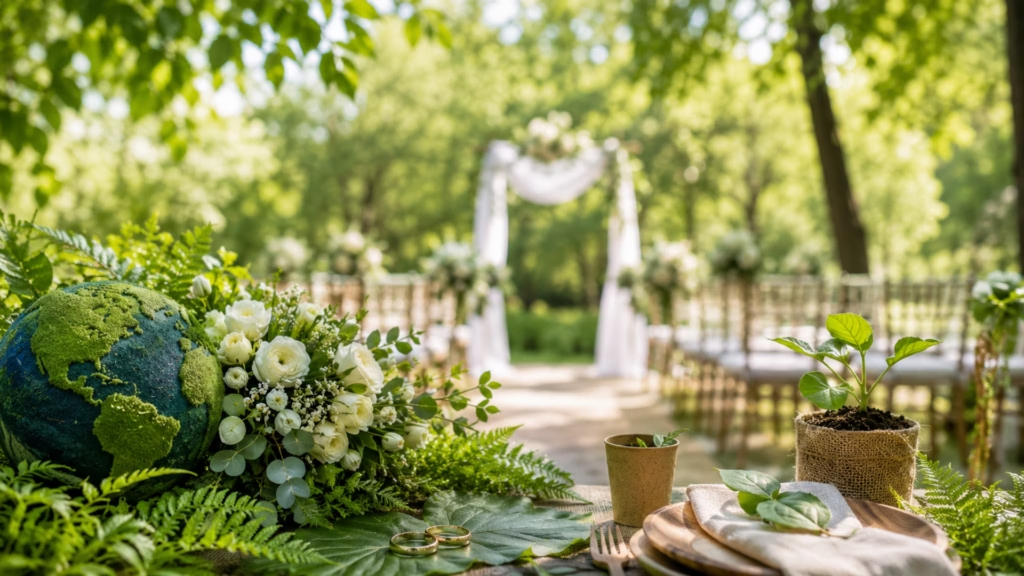
World Environment Day is the United Nations’ primary platform for raising global environmental awareness, observed every year on June 5 in more than 150 countries. In 2026, the global commemoration is hosted by Baku, Azerbaijan, under the theme “Inspired by Nature. For Climate. For Our Future,” with a focus on nature-based solutions to the climate crisis.
For couples planning weddings in 2026, the relevance is direct. The Indian wedding industry generates significant environmental load: an average multi-day destination wedding for 200 guests produces between 40 and 80 tonnes of CO2-equivalent emissions through guest travel alone, before food waste, single-use décor, and non-biodegradable materials are factored in. These are not numbers designed to create guilt. They are numbers that make the case for intentional choices that most couples have already started wanting to make.
Are Destination Weddings Actually Eco-Friendly?
This is the question that deserves a straight answer rather than a diplomatic deflection.
The honest version: destination weddings have a higher per-guest carbon footprint from travel than local weddings, full stop. A 200-guest wedding where guests travel from Delhi to Goa by air generates approximately 28 to 35 tonnes of aviation-related CO2. That number is real and it cannot be wished away with bamboo straws.
What destination weddings do offer that local weddings cannot is consolidation. When 200 guests share one location for three to four days, the per-event carbon cost is spread across multiple ceremonies. A mehendi, sangeet, pheras, and reception at the same venue replace four separate local events at four separate venues with four separate rounds of logistics, vendor travel, and resource consumption. One well-chosen nature destination can carry all of it.
The net calculation depends entirely on venue selection, travel logistics, and on-ground choices. A forest resort in Ranthambore that sources local produce, composts food waste, and runs group bus transfers from Delhi is measurably more sustainable than a hotel banquet hall in Mumbai that imports flowers from Pune, uses disposable buffet packaging, and has no nature connection whatsoever.
The destination itself is not the environmental decision. What you do there is.
The 5 Best Eco-Friendly Destination Wedding Locations in India for 2026
Ranthambore: Forest Weddings Inside a Tiger Reserve Buffer Zone
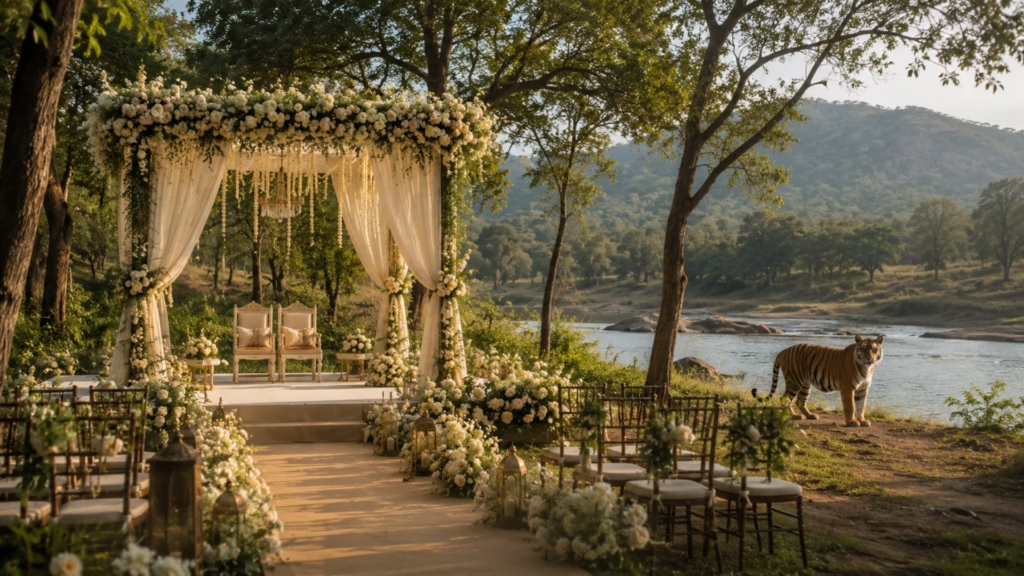
Ranthambore is the most operationally compelling eco-wedding destination in India for one reason that no hill station or beach can replicate: the forest is not a backdrop. It is the context. Every venue in Ranthambore sits within or immediately adjacent to one of India’s most significant wildlife corridors, and that proximity shapes everything from the décor philosophy to the permitted sound levels during evening functions.
Six Senses Fort Barwara is the lead venue here, and its credentials go beyond the marketing language. The property is a meticulously restored 14th-century fort in Chauth Ka Barwara with an explicit focus on conservation, rewilding, and community engagement. Couples booking weddings here are not simply renting a beautiful space. They are engaging with a property that treats its ecological footprint as a core operational value. With 48 suites, a Zenana Lawn that holds 220 guests, and a Stepwell venue that seats 80 for intimate ceremonies, the configuration supports multi-day weddings without requiring a second property.
For couples who want scale alongside nature immersion, Nahargarh Ranthambore offers the largest capacity in the cluster. Its Arjun Mahal Banquet Hall spans 10,000 sq. ft. for up to 400 guests, while the property’s ivory-white fortification sits surrounded by thousands of trees within sight of the National Park boundary. The venue’s amphitheatre configuration supports evening cultural performances that draw on local Rajasthani traditions rather than imported entertainment concepts.
The Baagh Ananta Elite provides the most flexible outdoor configuration, with a 7,000 sq. ft. Pool Lawn for 280 guests, a 5,000 sq. ft. Aravali Garden for 200, and a connecting Middle Lawn for breakout ceremonies of 40 guests. For a three-day wedding where different ceremonies need different settings, this site-plan flexibility means décor and staging teams are not fighting the same space twice.
One operational note that couples consistently miss: venues in the Ranthambore buffer zone operate under noise restrictions after 10 pm. DJ-heavy sangeet events that run past midnight in a Jaipur hotel are not the same experience here. Couples who plan accordingly, and design their evenings around live folk musicians, campfire settings, and the natural soundscape of the forest, consistently report that the constraint became their favourite part of the wedding. Couples who discover this restriction in month two of planning face a harder conversation.
Practical eco-wedding choices at Ranthambore venues:
- Use marigold and local wildflower arrangements instead of imported roses; florists in Sawai Madhopur supply seasonal blooms year-round
- Request a group AC bus transfer from Delhi or Jaipur rather than 40 separate car journeys; the Ranthambore road is narrow and parking at most properties is limited
- Incorporate a dawn jungle safari into the wedding itinerary as a guest activity; it reinforces the forest context and generates zero additional carbon beyond what guests are already generating at the property
For a deeper look at venue options in this region, our destination wedding venues in India guide covers the full portfolio with capacity and pricing context.
Jim Corbett: Jungle Luxury on the Banks of the Kosi River
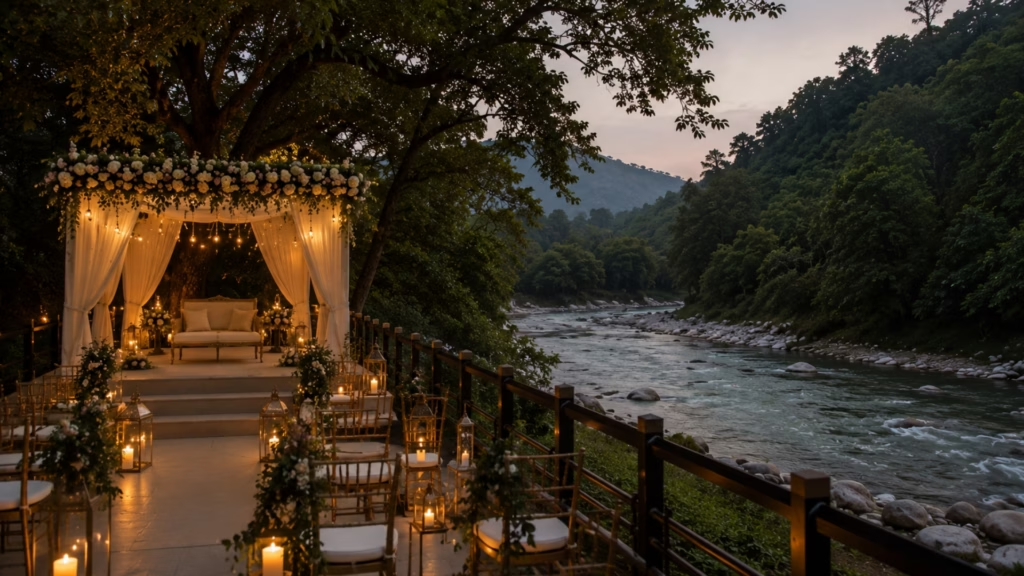
Jim Corbett National Park is India’s oldest wildlife reserve, and the wedding venues clustered along the Kosi River represent the most developed eco-luxury infrastructure of any forest destination in North India. The combination of Himalayan foothills, dense sal forest, river frontage, and established five-star hospitality makes this the category leader for couples who want a jungle wedding without sacrificing operational reliability.
Byaah by Paatlidun is the most purpose-built wedding property in the entire Corbett cluster, and it earns that position through specificity rather than marketing. Spread across 22 acres in the village of Bhakrakot, the property holds 79 uniquely designed cottages and villas built using mud construction techniques drawn from Kumaoni vernacular architecture. The Bugyal Pool Lawn alone spans 30,000 sq. ft. and holds 400 guests, making it the largest pool lawn in the Jim Corbett region by a significant margin. The name “Byaah,” meaning wedding in Kumaoni, is not branding. It signals that this property was designed from inception for multi-day celebrations embedded in local culture, with Kumaoni folk performances, star-lit bush dinners, and jungle safari experiences built into the wedding program rather than added as afterthoughts.
The ecological argument for Byaah by Paatlidun is also architectural. Mud villa construction, including the 5,000 sq. ft. Kothi and the 2,000 sq. ft. Bangla garden courtyard mud villa, has a fraction of the embodied carbon of concrete and steel hospitality construction. The surrounding dense sal forest and rich birdlife are functional wildlife habitat, not decorative greenery. Kosi River picnic spots and riverside trails give guests an immersive natural experience between ceremonies.
Jim Corbett Marriott Resort & Spa carries an explicit sustainability designation on its property listing, which in Marriott’s case connects to their global Serve360 environmental commitment framework. With a 2,400 sq. ft. Riverside Lawn holding 750 guests and a 2,100 sq. ft. Central Lawn for 500, this is the highest-capacity venue in the Corbett cluster and the most appropriate choice for weddings above 400 guests that still want a river-facing ceremony setting.
Taj Corbett offers the most architecturally restrained option, with 61 rooms and suites distributed across 52,600 sq. mt. of land beneath imperial deodar and sal trees on the Kosi river bank. For couples planning an intimate destination wedding of 80 to 110 guests who want the Taj service standard in a forest setting, the Woods venue at 2,750 sq. ft. is the right configuration. The deodar canopy overhead is not replicated anywhere in the broader Corbett property landscape.
Lemon Tree Premier Corbett has 23,000 sq. ft. of open lawns capable of holding 920 guests, which makes it the volume leader in the cluster for large baraat processions or sangeet setups where scale matters more than intimacy. Its location minutes from the Durga Devi and Dhangarhi gates of the National Park means guests can complete a morning safari and return for a pheras ceremony in the same day without any logistical compromise.
For couples already researching this destination, our dedicated wedding venues in Jim Corbett page has current pricing and availability data across the full property portfolio.
Rishikesh: Riverside Ceremonies in the Yoga Capital of the World
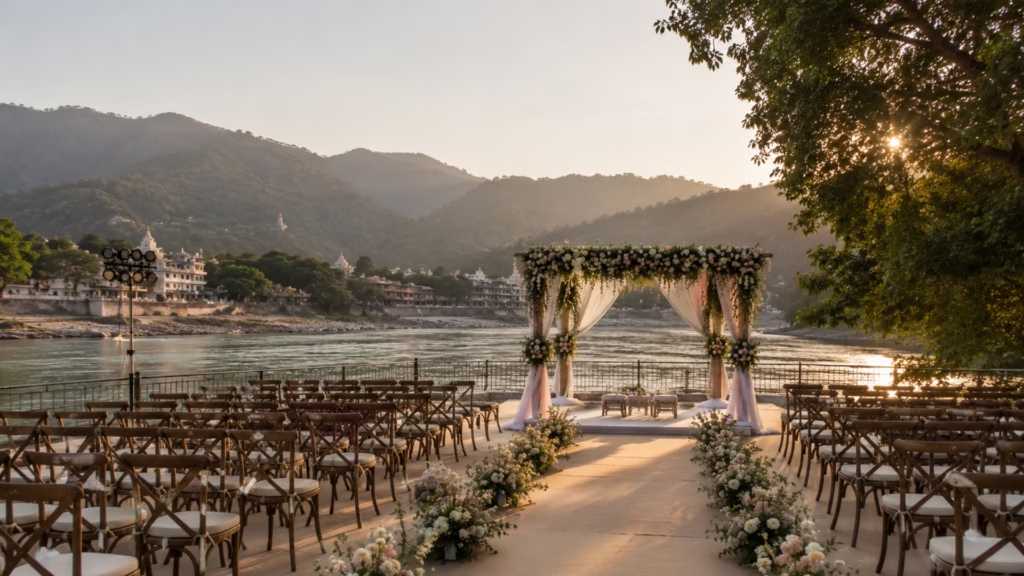
Rishikesh occupies a unique position in the eco-wedding landscape because the destination’s identity is inseparable from its environmental context. The Ganga, the Himalayan foothills, the yoga and Ayurveda culture, the spiritual significance of Triveni Ghat: these are not amenities that venues add to their offering. They are the reason the destination exists. Any wedding held here inherits that context automatically.
Taj Resort & Spa Rishikesh is the most scenically positioned property in the cluster. Situated on the banks of the Ganga in the village of Singthali, 30 km from the city, with the Himalayas as the permanent backdrop, it offers 79 rooms and a Sports Lawn that seats 100 guests in a riverside setting that no decorator can manufacture. The Singthali Birding Trek from the property provides a guest activity that is categorically different from anything available at an urban banquet venue.
For couples who want wellness integration as a core element of the wedding experience, Sterling Palm Bliss Rishikesh is the specific recommendation. The 2.5-acre resort on the banks of the Ganga offers Ayurvedic treatments, meditation hall, and yoga facilities as resident offerings, not scheduled extras. Pre-wedding wellness sessions, morning yoga for the bridal party, and Ayurvedic treatments integrated into the mehendi day are all operationally straightforward here in a way that would require significant coordination at most other venues.
The Roseate Ganges in Shivpuri takes the smallest-scale approach: 17 villas overlooking the Ganga, with hiking trails, outdoor pool, and a yoga programme embedded in daily operations. For an intimate wedding of 30 to 50 guests where the emphasis is on an immersive nature experience rather than a large-format celebration, this property offers a quality-per-guest experience that larger venues cannot match.
Westin Resort & Spa Rishikesh provides the most infrastructure-complete option, with 141 rooms, one of the region’s largest conference ballrooms at 7,287 sq. ft., and a 6,210 sq. ft. lawn. For weddings that need both a large venue capacity and the Himalayan foothills setting, this is the reliable choice.
The operational reality of Rishikesh weddings that couples must understand before booking: Rishikesh is a semi-sacred city with restrictions on alcohol at certain venues and within certain proximity to the ghats. Couples who discover this after confirming a caterer who operates an open bar face a genuine operational problem. The venues listed above all operate within their respective licensing terms, but the specific terms vary by property location and must be confirmed in writing before the F&B agreement is signed.
Mussoorie and Kasauli: Himalayan Hill Station Weddings with Forest Settings
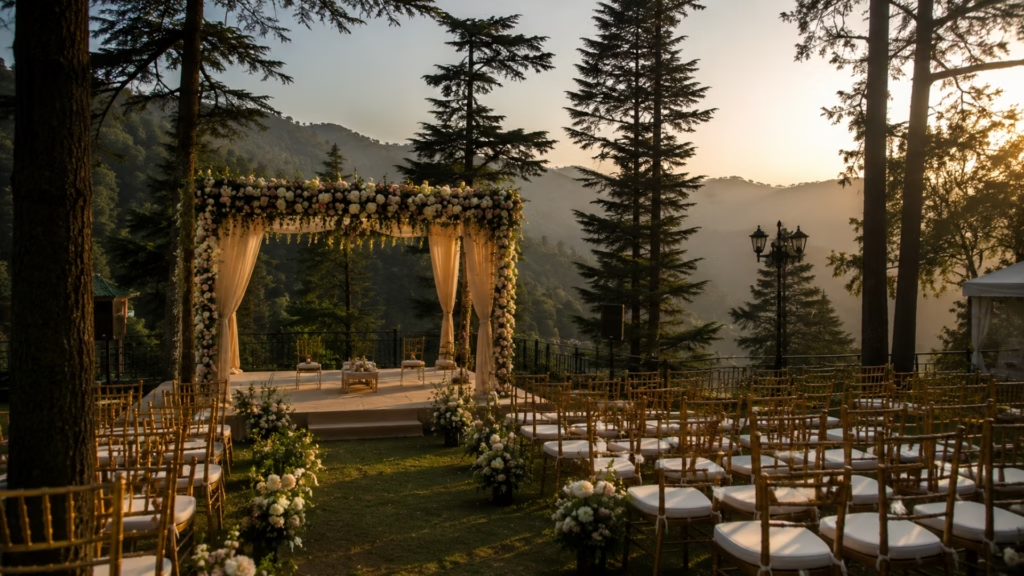
Hill station weddings occupy a specific emotional position in the Indian wedding imagination: the mist, the pine forests, the colonial architecture, the cool air during what would otherwise be a summer wedding in the plains. The ecological argument for Mussoorie and Kasauli is land-use based. These venues sit within existing hill station infrastructure rather than new construction in virgin ecosystems, and their natural temperature regulation reduces HVAC dependency significantly compared to plains venues.
JW Marriott Mussoorie Walnut Grove is the most comprehensively equipped property in the Mussoorie cluster for destination weddings. With 115 rooms, a JW Lawn of 11,829 sq. ft. holding 475 guests, and an amphitheatre of 7,717 sq. ft. for 310 guests, it supports full multi-day wedding configurations within a single property. The walnut grove setting and valley overlook provide a natural ceremony backdrop that no décor team needs to construct. Its proximity to Benog Wildlife Sanctuary keeps the ecological frame intact throughout the guest experience.
Welcomhotel The Savoy Mussoorie carries the deepest heritage credentials of any Mussoorie wedding property. Built in English Gothic style, with a Central Lawn of 15,000 sq. ft. holding 600 guests, it combines the largest outdoor capacity in the hill station with a heritage narrative that has genuine architectural and historical depth. For couples who want the Mussoorie hill station experience at scale, this is the lead option.
Jaypee Residency Manor provides the only 360-degree Himalayan panorama of any venue in this guide. Spread across 9 acres on a hilltop, with a Terrace Garden holding 600 guests, it is the choice for couples who want the drama of complete mountain visibility from every ceremony angle. The ballroom at 5,200 sq. ft. holds 208 guests for indoor ceremonies when weather requires it.
In Kasauli, WelcomHeritage Glenview Resort occupies the most operationally balanced position: 50 rooms, a Grande Hall of 6,250 sq. ft. for 250 guests, and a Sky Deck of 3,750 sq. ft. for 150, at 6,000 feet elevation with panoramic Shivalik range views. The cantonment-era setting and old-world hill station character of Kasauli itself, which has resisted the commercialisation that has changed parts of Shimla and Mussoorie, makes this a venue whose destination context does most of the atmospheric work.
Goa: Coastal Eco-Weddings with Paddy Field and Beachfront Settings
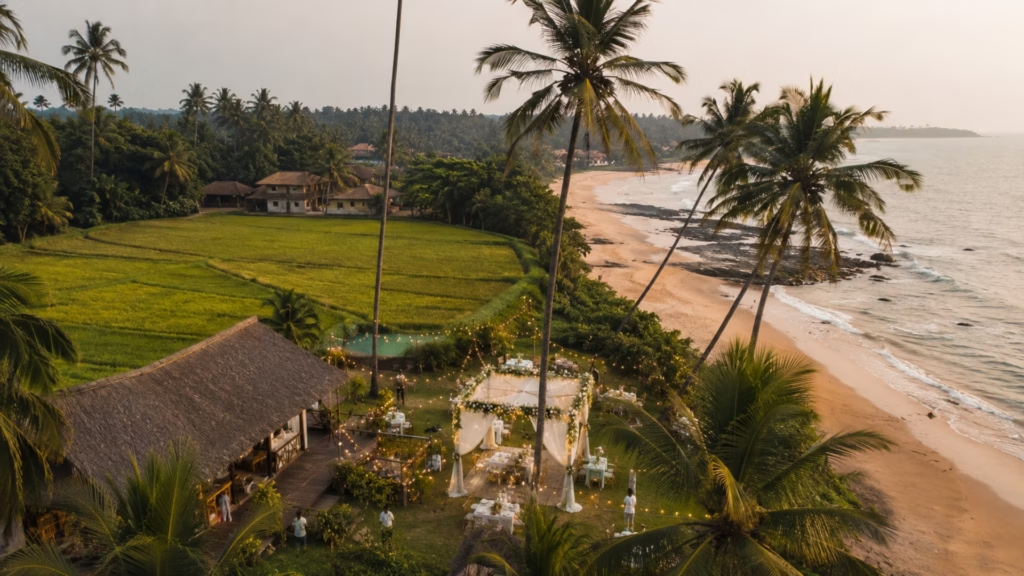
Goa’s eco-wedding narrative is more complex than forest destinations because the ecological pressures on Goa’s coastline are significant and well-documented. The genuinely sustainable choice in Goa is not a beachfront hotel constructed on reclaimed coastal land. It is a property that sits within the existing landscape and demonstrates operational environmental responsibility.
Alila Diwa Goa is the specific recommendation on this basis. The property sits surrounded by emerald palms and verdant paddy fields flowing toward the Arabian Sea, embedded in the agricultural landscape of South Goa rather than constructed on it. The Alila brand’s operational standards include documented waste management, water conservation, and supplier responsibility frameworks. With 118 rooms and an Udeta outdoor venue holding 330 guests, it provides full wedding-scale capacity within a genuinely nature-connected setting 20 minutes from Dabolim Airport.
For couples exploring broader Goa destination wedding options, our complete guide to a destination wedding in Goa covers venue categories, seasonal cost variations, and the specific operational considerations that apply to beach ceremony logistics.
How to Plan an Eco-Friendly Destination Wedding: A Step-by-Step Approach
Step 1: Choose the destination before the venue
The single most consequential environmental decision in a destination wedding is the location, not the individual property. A venue within walking distance of a national park boundary has a fundamentally different ecological context than a resort constructed on cleared agricultural land. Evaluate the destination’s existing ecosystem before evaluating individual venue features.
Step 2: Prioritise venue consolidation over venue variety
Multi-day Indian weddings that spread ceremonies across two or three different properties generate significantly more logistics, vendor travel, and resource consumption than those consolidated at a single property. The most sustainable configuration is one property with multiple outdoor and indoor venue spaces capable of holding different ceremony scales. Byaah by Paatlidun’s nine distinct venue spaces, or Nahargarh’s combination of lawn, amphitheatre, and banquet hall, exemplify this approach.
Step 3: Negotiate local sourcing directly into the F&B contract
Most five-star venues default to supply chains that prioritise consistency over locality. Request, in writing, that a minimum of 60 percent of fresh produce come from within 100 km of the venue. In Ranthambore, Sawai Madhopur market supplies seasonal vegetables and dairy. In Rishikesh and Corbett, Kumaoni and Garhwali agricultural producers supply fresh produce year-round. This is a negotiable clause. Venues that refuse it are telling you something useful about their operational priorities.
Step 4: Design the décor brief around what grows there
The single largest source of waste in Indian destination wedding décor is imported flowers. Venues in Ranthambore are surrounded by marigold, mogra, and seasonal wildflower supply. Jim Corbett’s forest setting suits sal leaf, bamboo, and local timber elements. Mussoorie and Kasauli venues work naturally with pine cones, dried wildflowers, and locally sourced wool textiles. When the décor is sourced from within the destination’s own ecological zone, it biodegrades there without transportation cost.
Step 5: Consolidate guest travel into group logistics
For a 150-guest wedding in Jim Corbett from Delhi, the difference between 150 individual car journeys and 4 group AC coaches represents approximately 18 tonnes of CO2. This is also the difference between a chaotic arrival sequence that stresses the venue’s driveway and a coordinated check-in that allows your wedding team to focus on setup rather than traffic management. Group transportation is both the more sustainable choice and the operationally cleaner one.
Step 6: Replace single-use wedding favors with experience-based or contribution-based alternatives
Miniature perfume bottles, trinket boxes, and wrapped sweets in individual plastic packaging generate hundreds of units of non-biodegradable waste per wedding. The alternatives that couples in our portfolio have used successfully: a tree planted in the guest’s name through an verified afforestation programme, a contribution to the wildlife conservation fund associated with the venue’s national park, a locally hand-crafted keepsake from an artisan in the host community, or a seed paper card that guests plant at home.
Step 7: Build the wedding itinerary around the destination’s natural experiences
This is the step that transforms an eco-friendly wedding from a list of restrictions into an experience that guests genuinely remember. A dawn jungle safari from Nahargarh before the mehendi. A sunrise yoga session on the Ganga bank at Taj Rishikesh before the haldi. A guided forest walk through the sal trees at Byaah by Paatlidun on the morning of the ceremony day. These are experiences that no urban banquet hall can replicate, and they are available to couples at these venues without additional coordination cost.
What Are the Best Sustainable Wedding Ideas for 2026?
Sustainable wedding ideas that work operationally in Indian destination wedding contexts, not just in theory:
- Seed paper invitations printed by vendors in Delhi, Jaipur, and Bengaluru: guests plant the invitation after the wedding and wildflowers grow from it
- Banana leaf and terracotta service for mehendi and haldi catering instead of single-use plastic plates
- Locally commissioned silk or khadi fabric backdrops rather than synthetic fabric mandap draping
- Living plant centerpieces that guests take home as favors instead of cut flower arrangements that last 48 hours
- LED lighting rigs replacing halogen stage lighting: 60 percent lower energy consumption per event hour
- Composting agreements negotiated with the venue’s catering team for post-meal food waste
- Digital wedding coordination for vendor briefings and guest communication: reduces the paper load from physical coordination kits significantly
- Carbon offset packages offered through verified programmes like Gold Standard or Verra as a line item in the wedding budget
The forest is ready. The river is waiting. Are you?
How Do I Make My Wedding Environmentally Friendly Without Sacrificing Luxury?
The false trade-off assumption, that sustainability and luxury are in tension, is the most persistent misconception in eco-wedding planning. The venues in this guide are evidence to the contrary.
Six Senses Fort Barwara is a 14th-century restored palace with 48 suites, Ayurveda-rooted wellness programming, and conservation-driven operations. It is simultaneously one of the most luxurious and most environmentally intentional properties in Rajasthan. Byaah by Paatlidun has mud villa architecture, star-lit bush dinners, and Kumaoni folk cultural experiences alongside butler service and luxury pool villas. JW Marriott Walnut Grove Mussoorie has 115 rooms with Himalayan valley views, a 7,717 sq. ft. amphitheatre, and skiing access, within a forest setting that makes the property’s ecological context inseparable from its luxury identity.
The practical answer: luxury in nature destinations is delivered through quality of experience, not quantity of imported materials. A Kosi riverside ceremony at sunset at Taj Corbett under deodar trees is more expensive to replicate artificially than it is to stage naturally. The venue does the work. You reduce the waste.
Eco-Friendly Wedding Décor Ideas That Work in Indian Destination Contexts
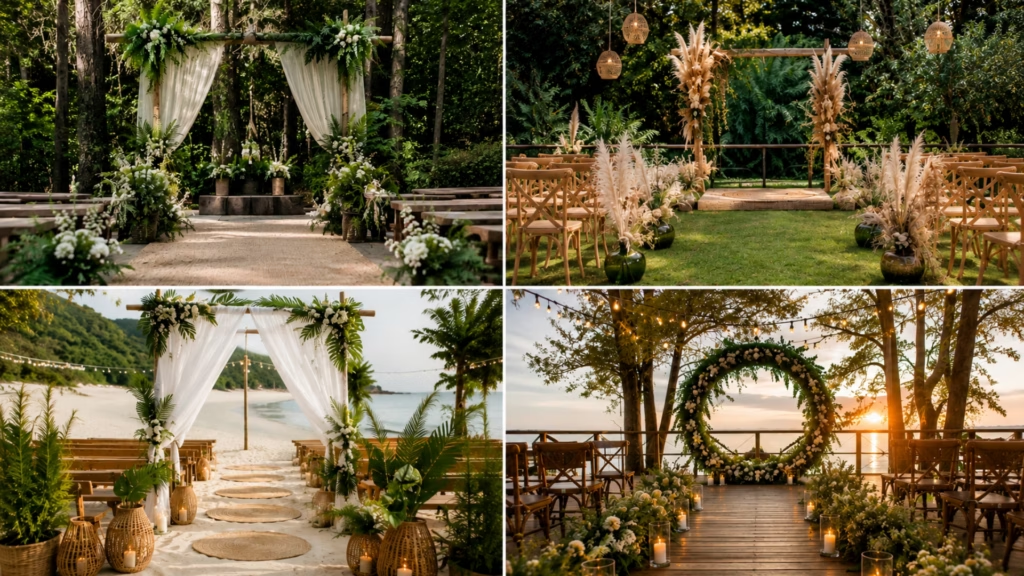
Sustainable wedding décor that holds up under the operational realities of a multi-day Indian wedding, not just in a styled photoshoot:
Floral alternatives that work at scale:
- Marigold garlands from local Rajasthani or Kumaoni suppliers: Rs. 800 to Rs. 1,500 per kg depending on season and sourcing distance
- Mogra string arrangements for mandap and guest tables: fragrant, locally grown in Maharashtra and Karnataka
- Dried wildflower and pampas grass installations: zero refrigeration required, no wilting risk over a three-day function period
- Living succulent and potted plant centerpieces: guests take them home, the event generates zero floral waste
Mandap and venue structures:
- Bamboo mandap frameworks sourced within 200 km of most destination wedding locations: structurally sound, biodegradable, and visually distinct from synthetic alternatives
- Khadi and handloom fabric draping from Rajasthani and Kumaoni textile producers: supports local artisan income and composts after use
- Reclaimed wood décor elements from local timber yards: widely available in Uttarakhand markets near Jim Corbett and Rishikesh venues
Table settings and service:
- Banana leaf service for mehendi and haldi catering: traditional in South Indian wedding practice, adoptable in any destination
- Terracotta cups for chai and welcome drinks: widely produced in Rajasthan, biodegradable, and carries a visual authenticity that plastic alternatives lack
- Leaf plates from sal, palash, or banana: fully biodegradable within 30 days, produced by forest communities in Uttarakhand and Jharkhand
For broader theme and décor inspiration across different wedding styles, our top 10 modern wedding themes for Indian couples guide has category-specific visual direction.
What Are Sustainable Wedding Trends in 2026?
The sustainable wedding trends gaining the most traction in India’s destination wedding market in 2026, drawn from our booking data and couple consultations across the year:
Micro-destination weddings: Intimate celebrations of 50 to 80 guests replacing 300-guest events, reducing per-ceremony resource consumption by 60 to 70 percent while increasing per-guest experience quality. Venues like The Roseate Ganges in Rishikesh with 17 villas and Oneness in Byasi with 12 cottages are purpose-sized for this format.
Ceremony consolidation: Couples designing all four to five functions at a single multi-space property rather than distributing across two venues. The environmental benefit is compounded by the logistical simplification.
Local artisan integration: Wedding entertainment and décor sourced from host community artisans: Kumaoni folk musicians at Jim Corbett venues, Rajasthani puppet shows and folk dancers at Ranthambore, Garhwali cultural performances at Rishikesh properties. This reduces imported entertainment logistics and directly supports local cultural economy.
Plant-forward wedding menus: Not vegetarian menus by default, but menus where 70 percent of dishes are built around locally grown seasonal produce, with meat and fish sourced from verified regional suppliers. Couples who negotiate this into their F&B agreement consistently report lower catering costs alongside the environmental benefit.
Wellness-integrated wedding itineraries: Incorporating sunrise yoga, Ayurvedic treatments, forest walks, and meditation sessions into the three to four day wedding program as genuine guest experiences. Venues like Sterling Palm Bliss in Rishikesh and Byaah by Paatlidun in Jim Corbett have this capacity built into their existing offering.
For a broader view of how the destination wedding market is evolving this year, our analysis of the biggest upcoming destination wedding trends in India for 2026 covers the full shift in couple priorities across budget segments.
Eco-Friendly Destination Wedding Venue Comparison: Which Location Fits Your Wedding?
| Location | Best For | Natural Setting | Max Capacity | Eco Credential Strength |
| Ranthambore | Heritage + wildlife forest weddings | Tiger reserve buffer zone | 400 guests | Very high (Six Senses, conservation-linked) |
| Jim Corbett | Jungle luxury, river-facing ceremonies | Sal forest, Kosi riverside | 750 guests | High (Byaah by Paatlidun mud architecture) |
| Rishikesh | Riverside spiritual + wellness weddings | Ganga foothills, Himalayan | 250 guests | High (yoga/wellness integrated) |
| Mussoorie | Hill station, pine forest, large-scale | Himalayan valley views | 600 guests | Moderate (natural temperature regulation) |
| Kasauli | Intimate hill station, boutique scale | Shivalik range, 6,000 ft | 250 guests | Moderate (low-density, heritage setting) |
| Goa (Alila Diwa) | Paddy field coastal, mid-scale | Palm and paddy, coastal | 330 guests | High (Alila operational standards) |
Your eco-friendly wedding starts with one conversation.
Frequently Asked Questions
What is World Environment Day and what is the 2026 theme?
World Environment Day is the United Nations’ primary global platform for environmental awareness, observed on June 5 every year in more than 150 countries. The 2026 edition is hosted by Baku, Azerbaijan, with the theme “Inspired by Nature. For Climate. For Our Future,” focusing on nature-based solutions to climate change as the defining environmental strategy of this decade.
How can I plan an eco-friendly destination wedding in India?
Plan an eco-friendly destination wedding in India by selecting a venue inside or adjacent to a protected forest or wildlife zone, negotiating local sourcing directly into your F&B contract, replacing imported floral décor with seasonal native flowers and biodegradable alternatives, consolidating guest travel into group transportation, and designing your itinerary around natural experiences like safaris, river yoga, and forest walks rather than imported entertainment.
Are destination weddings more or less eco-friendly than local weddings?
Destination weddings generate higher per-guest carbon from travel but consolidate multiple ceremonies at one location, reducing the cumulative logistics of four to five separate local events. The net environmental impact depends entirely on venue selection, guest travel mode, and on-ground choices. A forest resort in Ranthambore with group bus transfers and local catering can be measurably more sustainable than a city banquet hall across four separate event days.
What are the best eco-friendly destination wedding venues in India for 2026?
The strongest eco-friendly destination wedding venues in India for 2026 are Six Senses Fort Barwara in Ranthambore, which combines heritage restoration with active conservation programming; Byaah by Paatlidun in Jim Corbett, built using Kumaoni mud architecture across 22 acres of sal forest; Taj Resort and Spa in Rishikesh, situated on the Ganga bank with Himalayan foothills as the ceremony backdrop; and Alila Diwa Goa, set within paddy fields with documented operational sustainability standards.
How do I reduce my wedding carbon footprint without cutting the guest list?
Reduce wedding carbon footprint without cutting the guest list by switching from individual car travel to group coach transfers (saving 15 to 20 tonnes of CO2 for a 150-guest wedding from Delhi to Ranthambore), sourcing all catering from within 100 km of the venue, eliminating single-use plastic from décor and service, and choosing a venue within 500 km of most guests’ home city rather than one that requires flights.
What does sustainable wedding décor look like in practice at Indian forest destinations?
Sustainable wedding décor at Indian forest destinations uses marigold, mogra, and seasonal wildflowers from local suppliers instead of imported roses, bamboo mandap frameworks instead of steel and synthetic structures, khadi or handloom fabric draping instead of synthetic fabric, terracotta and banana leaf service instead of single-use plastic, and living plant centerpieces that guests take home instead of cut flower arrangements that become waste within 48 hours.
Can I have a luxury destination wedding and still be eco-friendly?
Yes. Six Senses Fort Barwara in Ranthambore is a 14th-century restored palace with Ayurveda wellness programming and active conservation commitments. Byaah by Paatlidun has pool villas, butler service, and star-lit bush dinners built on mud architecture in a sal forest. JW Marriott Walnut Grove Mussoorie has a 7,717 sq. ft. amphitheatre with Himalayan valley views. Sustainability and luxury are not in opposition at nature destination venues. The natural setting delivers the luxury; the operational choices determine the environmental impact.
How far in advance should I book an eco-friendly destination wedding venue in India?
Book eco-friendly destination wedding venues in India 10 to 14 months in advance for peak season dates between October and February. Six Senses Fort Barwara and Byaah by Paatlidun, as the most distinctive properties in the Ranthambore and Jim Corbett clusters respectively, reach full booking capacity for premium weekend dates 12 months ahead. Couples who begin conversations in month six for an October or November date will find limited availability at the highest-demand properties.
What questions should I ask a venue to verify its eco-friendly credentials?
Ask these specific questions: Does the property have a documented waste management and composting programme? What percentage of fresh produce is sourced from within 100 km of the venue? Does the property generate any energy from solar or renewable sources? Is there a rainwater harvesting or greywater recycling system on the property? Does the property have any formal conservation or rewilding partnership with the adjacent national park or forest authority? Venues that cannot answer these questions specifically are describing their setting, not their operations.
What Indian wedding ceremonies are best suited to nature destination settings?
Haldi ceremonies are most naturally suited to outdoor nature settings because the turmeric and flower ritual is inherently connected to the earth and garden contexts from which it historically comes. Mehendi evenings work well on open lawns with folk musician accompaniment. Pheras under open sky or within the frame of a historic fort or forest clearing carry a ceremonial weight that indoor mandaps cannot replicate. Sangeet evenings in amphitheatre settings with the forest as acoustic backdrop replace the requirement for artificial sound environments.
About the Author
Destination Weddings India is India’s most trusted destination wedding venue booking platform, helping 2,000+ couples every month find and book their perfect wedding venue across 30+ premium destinations in India and 6 international locations including Dubai, Abu Dhabi, Ras Al Khaimah, Bahrain, Sri Lanka, and Thailand.
From royal palaces in Udaipur and Jaipur to beachfront resorts in Goa and hillside retreats in Shimla, DWI’s curated portfolio covers 700+ handpicked properties across luxury, heritage, and boutique categories spanning 8 wedding types: Palace, Beach, Hillside, Backwater, Desert, Forest, City, and Cruise.
Every venue we recommend is personally vetted by our team of wedding specialists. Every article, guide, and resource we publish is grounded in real booking experience and genuine venue knowledge, not sponsored content, not generic advice, and not information copied from hotel brochures.
Since 2021, DWI has built one of India’s largest and most reliable destination wedding venue networks, trusted by couples across India, the UAE, the UK, the USA, Canada, and Australia.
2,000+ Couples Monthly | 700+ Venues | 30+ Destinations in India | 6 International Destinations | Active Since 2021Explore India’s finest destination wedding venues at: https://destinationweddingsindia.com/contact-us/